Vape atomiser: the four architectures explained
The word is everywhere on British shop pages and it does not mean the same thing to everyone using it. To a manufacturer, a vape atomiser is any part that turns liquid into vapour. To a UK retailer, the same word usually points at the tank aisle, and sometimes at the rebuildable shelf. That drift causes expensive misunderstandings at the till. This guide puts the term back on its feet, then follows each architecture down to what it actually costs to live with.
What a vape atomiser really is
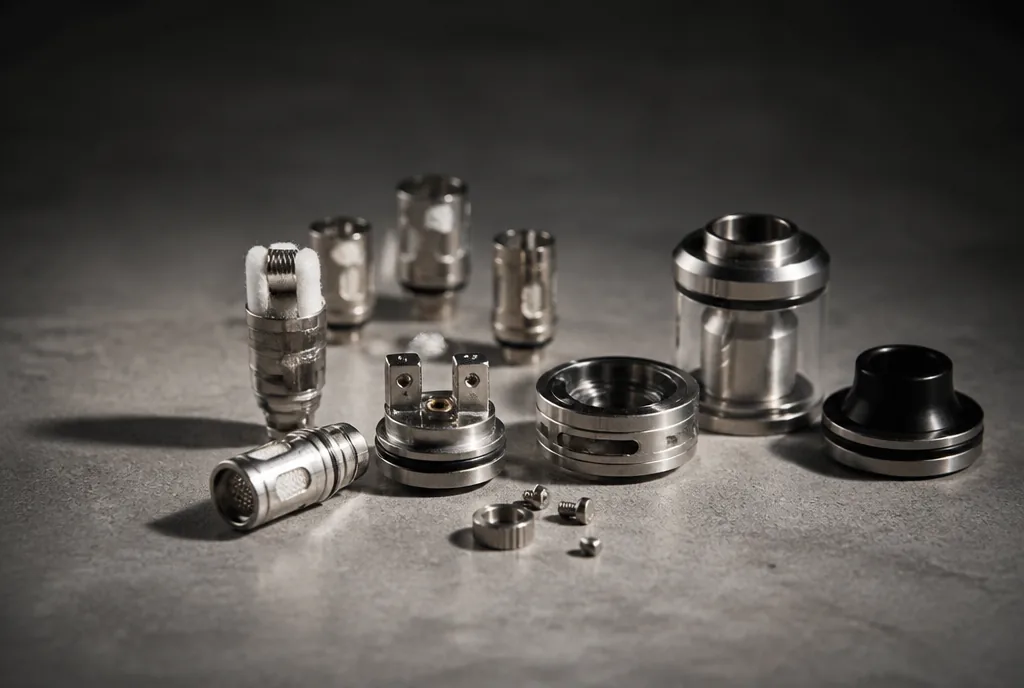
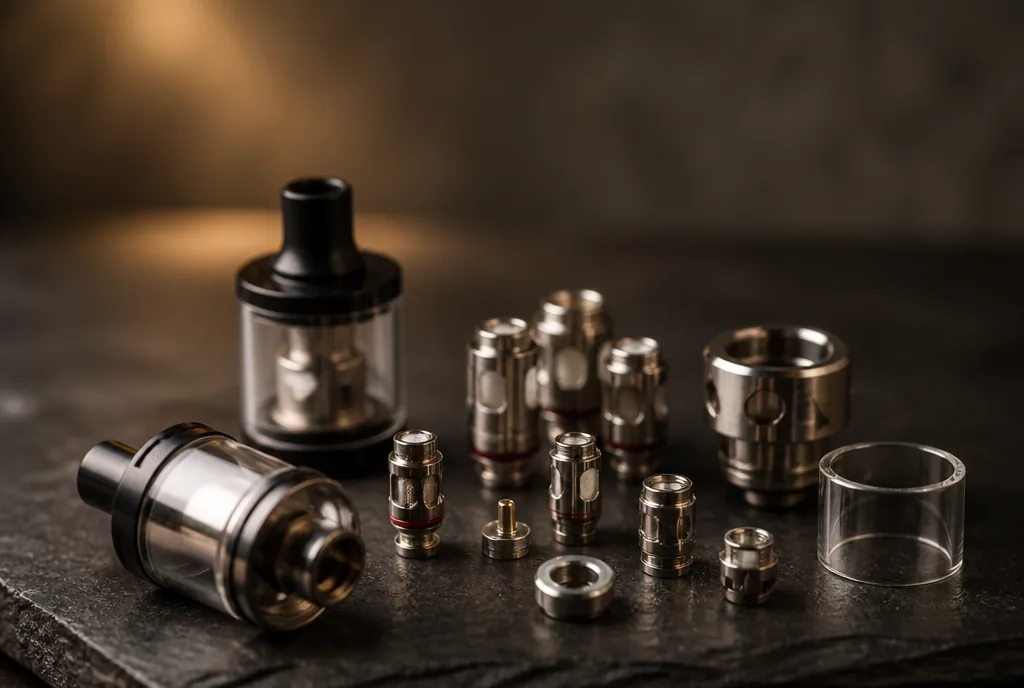
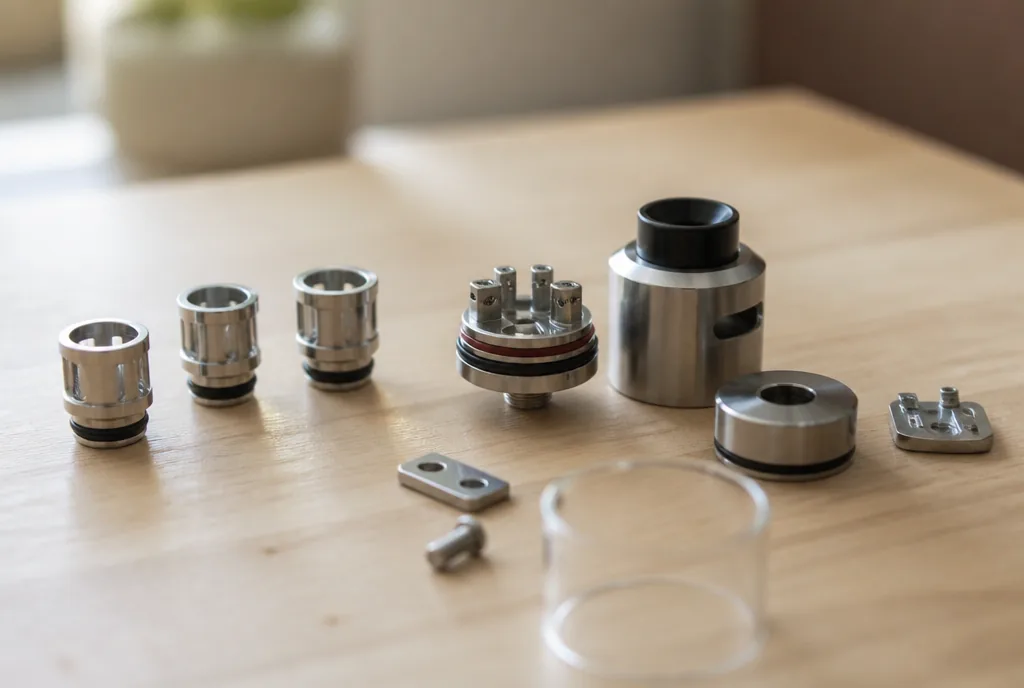
In the strict sense, a vape atomiser is the upper half of an e-cigarette: the part holding the heating element, the wick and the air path, screwed onto the battery through a standard connector. Its only job is to bring liquid up to temperature until it vaporises.
Anything that fills that role qualifies, including a pod cartridge or an off the shelf tank. British catalogues muddy this by filing tanks, coil heads and rebuildables under headings that overlap, so the same search returns a finished tank next to a bare build deck.
Holding both readings in mind avoids the first buying mistake. Typing atomiser into a UK shop search box rarely returns the product a newcomer actually needs, and the listing that comes back first is often the least suitable.
The physical principle, identical in every case
Underneath the variety of shapes, one mechanism repeats. Understanding it once removes the need to relearn how each new model works, because no architecture departs from it.
Current from the battery crosses a conductor of small cross section. That opposition to the flow dissipates energy as heat, which is the Joule effect. The lower the value of the circuit, the greater the current drawn at the same voltage.
That value, expressed in ohms, is what a regulated mod reads before every puff. It governs both the power delivered and the protections that fire when something is wrong, which is why a reading that fails or comes back too low stops the device dead.
Between the reservoir and the hot zone, a wick carries liquid by capillary action. Organic cotton in the vast majority of cases, occasionally ceramic fibre or porous metal mesh on certain models.
The flow rate of that wick is the real limiting factor of a vape atomiser. Too slow and the result turns dry; too fast and liquid drifts down by gravity towards the air inlets and out of the base.
Air entering through the inlets sweeps the heated zone then rises towards the mouthpiece. Its speed depends on the cross section of the openings, and its final temperature on the distance it travels. Two devices with identical builds but different air paths do not feel the same, and it is the most underrated criterion at the point of choice.
Four architectures, two questions to sort them
The pile of acronyms on a British listing suggests an endless catalogue. In practice two binary questions place any model on the market: is there a reservoir, and is the coil built by hand?
No reservoir and a hand built coil gives the dripper, acronym RDA. Liquid is dripped straight onto the cotton, autonomy is measured in a handful of puffs, and the flavour is the most direct of the family. That format gets its own treatment in our dripper guide.
A reservoir with a hand built coil gives the RTA, and its RDTA variant. The build sits in a chamber surrounded or topped by the tank, which feeds the wicks continuously. You keep the control of a rebuildable with several millilitres of running time.
A reservoir with a factory coil gives the tank, the best selling format by a distance. The coil arrives sealed in a head you screw in, use for a few days, then replace. No tool, no measurement, nothing to set.
No separate reservoir at all gives the pod cartridge, where tank and heating element form a single consumable clipped onto the battery. Simplicity is maximal, control is nil, and the running cost is dictated entirely by the proprietary cartridge.
What British rules change on the shelf
This is where a UK buyer cannot simply copy advice written for another market, because the hardware itself is built to a different specification here.
Refillable tanks sold in the United Kingdom are capped at 2 ml, nicotine containing e-liquid at 20 mg/ml, and those bottles at 10 ml. A model advertised abroad with a larger tank reaches British shelves in a restricted version, or not at all.
That single cap reshapes the comparison. Autonomy stops being a differentiator between tanks, so what remains is the air path, the coil range and the availability of spares. Vaping products are also not for sale to under-18s here, and that covers the hardware as much as the liquid.
The criteria that actually matter
A spec sheet lists a dozen figures, half of which have no bearing on daily use. Three deserve real attention, because they commit you for the life of the device.
Diameter comes before everything else. An atomiser wider than the top plate of the battery overhangs, and that is not merely ugly: the offset tires the connector every time you screw it down. Common diameters run from roughly 22 to 30 mm, and the figure also sets the internal volume available for the build.
The stated draw style comes next. Listings separate mouth to lung, where air is drawn in two stages, from direct lung, where it goes straight down. A vape atomiser designed for one copes badly with the other, whatever you do with the airflow ring, and that choice cascades into nicotine strength, liquid viscosity and working power.
Consumable availability closes the list. A coil that vanishes from British stock six months after purchase turns a good device into a paperweight. On a rebuildable the question changes shape entirely, since wire and cotton are generic and only seals and glass depend on the brand.
Diagnosing what has gone wrong
Whatever the architecture, failures fall into three families that share neither symptoms nor remedies. Knowing which one you are in saves a great deal of time.
The first group covers electrical contact problems: nothing heats, and the screen reports no circuit at all. The chip cannot read any value, for want of continuity between the connector and the heating element, a case covered step by step in our guide to the no coil detected message.
The second group covers abnormally low circuits, which the chip reads as a short and refuses to power, the situation examined in our guide to the coil shorted warning. The third gathers liquid supply faults: dry hits, condensation climbing into the mouthpiece, leaking through the air inlets.
That grid holds for a basic pod and for an advanced rebuildable alike, because all three families of cause flow from the common physical principle set out above.
Frequently asked questions
Is an atomiser the same thing as a tank?
A tank is an atomiser with a transparent reservoir and a factory coil. It belongs to the general category without covering the whole of it.
Can you change atomiser without changing battery?
Yes, as long as the connector is a standard 510 and the chip accepts the value of the circuit. Devices built around proprietary cartridges escape that rule.
Why do UK tanks hold so little?
British rules cap refillable tank capacity at 2 ml. Models advertised elsewhere with larger glass reach retailers here in a restricted version.
Does an atomiser really wear out?
The metal body lasts years. Seals, glass and threads are what degrade, and their replacement decides the real service life of the device.
Should you clean between two flavours?
A rinse of the tank and deck in warm water covers most cases. Skip it and the previous flavour stays noticeable for several days.
Choosing a vape atomiser with your eyes open
The right vape atomiser is not the most technical one but the one whose constraints match a real routine. A rebuildable demands time and constant electrical attention; a pod imposes a proprietary consumable and a fixed budget.
The two question grid used here, presence of a reservoir and nature of the build, places any model you meet in a British shop within seconds. It is the most durable reference point in a market where commercial names change every season.
Editorial content for adult readers only. Vaping products usually contain nicotine, a substance that causes addiction. Not for sale to under-18s in the United Kingdom. This article is not a buying recommendation.